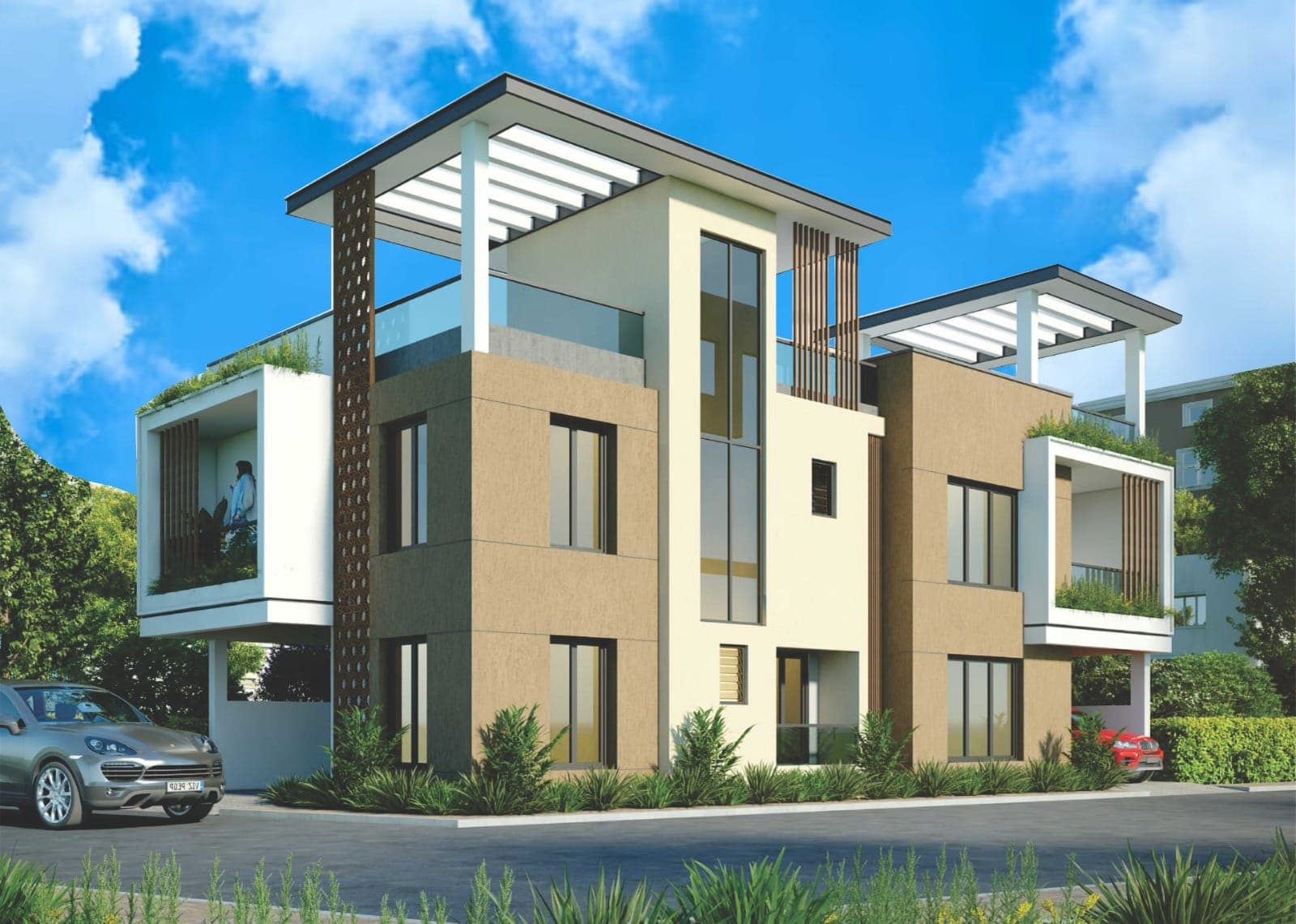
You have signed the sale deed, paid the stamp duty and you are holding the keys. That feels like the finish line. It is not. The flat you bought is, in most cases, an empty box with a few light points and basic bathroom fittings, and turning it into a place you can actually live in costs real money that nobody itemised for you at booking.
This is the spend that catches first-time owners in Velachery, Medavakkam, Sembakkam and the East Tambaram belt off guard. They budget down to the last rupee for the down payment, the loan margin and registration, then discover that a modular kitchen alone can run to a few lakhs before they have bought a single chair. We see it constantly: buyers who stay cash-stretched for six months after possession purely because no one walked them through move-in costs.
So let us do that here. This is a one-time setup budget, kept deliberately separate from the recurring cost of owning a flat (maintenance, property tax, utilities). The numbers below are realistic 2026 bands for a typical 2 or 3 BHK in south Chennai. Treat them as ranges to plan around, not quotes.
First, know what you actually bought: builder-finished vs bare shell
How much you spend in the first month depends almost entirely on the handover condition, and this varies a lot between builders. Two flats at the same price can hand over in completely different states.
A typical builder-finished flat in this part of Chennai usually comes with vitrified flooring laid, walls painted (often a single coat of basic emulsion, sometimes just primer), bathroom sanitaryware and a basic CP fittings set, a kitchen platform with a granite slab and a single sink, electrical wiring with switch plates and a few light points per room, and the main door plus internal doors fitted. That is a livable shell, but it is bare.
What is almost never included, even in a finished flat: the modular kitchen above the platform (cabinets, chimney, hob), any wardrobes, false ceiling and cove lighting, curtains or blinds, the geyser, a water purifier, any furniture, and the additional electrical points you will inevitably want. A bare-shell handover, more common in some smaller-builder and plotted projects, may give you bare cement walls, no flooring in parts, and only rough plumbing and electrical conduits. If you are buying one of those, your setup budget effectively doubles.
The interior spends that add up fastest
Interiors are where the money goes, and where it is easiest to lose discipline. Here is roughly what each line item runs in 2026 for a mid-range build quality. Prices swing with material grade, brand and how much custom carpentry you commission, so read these as planning bands, not fixed rates.
Modular kitchen
Usually your largest single interior line. A functional modular kitchen with factory-made shutters, decent hardware, a chimney and a hob typically lands in the range of 1.5 to 4 lakh for a 2 or 3 BHK, depending on the layout length, whether you go for an acrylic or laminate finish, and the brand of accessories. Tall units, a tandem basket set and good soft-close hinges push you toward the upper end. A pared-back laminate kitchen with basic baskets can be done closer to the bottom of that range.
Wardrobes and carpentry
Built-in wardrobes are the second big spend. Budget roughly 1,200 to 2,000 per sq ft of wardrobe shutter area, which works out to somewhere between 1.5 and 3.5 lakh to fit out the bedrooms of a typical 2 to 3 BHK. Add a TV unit, a small crockery or pooja unit and a foyer shoe cabinet and the carpentry total climbs further. This is the line where over-customising quietly destroys a budget.
False ceiling, lighting and electrical points
A POP or gypsum false ceiling in the living and dining area, with cove and spot lighting, typically costs 100 to 180 per sq ft of ceiling done. Doing the living room and a couple of bedroom borders might total 60,000 to 1.5 lakh including the light fixtures. Separately, builders give you the bare minimum of plug and switch points. Adding points for the fridge, microwave, washing machine, geysers, an inverter line, AC points and bedside switches usually runs 25,000 to 75,000 in extra electrical work.
Painting, plumbing and bathroom upgrades
- Painting: If the builder gave you only primer, a proper two-coat emulsion finish for the full flat runs roughly 25,000 to 70,000, depending on flat size and whether you choose a premium washable paint or a textured feature wall.
- Extra plumbing points: A water purifier line, a washing machine inlet and outlet, or relocating a sink can mean another 10,000 to 30,000.
- Bathroom fittings: Builder CP fittings are usually entry-grade. Upgrading taps, shower, health faucet and a mirror cabinet across two bathrooms is commonly 20,000 to 60,000.
- Curtains and blinds: Easy to underestimate. Curtains, rods and a few roller blinds for a full flat typically come to 30,000 to 80,000.
Furniture and the appliances you cannot skip
Even if you move in light, a few things are non-negotiable from week one. Beds with mattresses, a sofa, a dining set and basic seating for a 2 to 3 BHK realistically start around 1.5 lakh and rise quickly with quality. Buy the mattress well. You will spend a third of your life on it.
Essential appliances are the other unavoidable block. A refrigerator, a washing machine, a couple of ACs, geysers for the bathrooms and a microwave commonly total 1.5 to 3 lakh depending on star ratings and tonnage. If your chimney and hob are not already in the kitchen quote above, add those here rather than counting them twice. ACs are the swing factor: two or three split units with installation can be a lakh on their own. If your flat is on a higher or west-facing floor, take cooling seriously, because the heat load is real in a Chennai summer.
The one-time connections and setup charges people forget
Beyond interiors, there is a cluster of small setup charges that individually look minor and collectively cross a lakh. These are genuinely one-time and easy to leave out of a move-in budget.
- Piped gas connection: Where available in newer south Chennai projects, the connection and meter setup is usually a few thousand rupees. Otherwise, budget a fresh domestic LPG connection with a cylinder and regulator.
- Broadband: Installation and router charges for a fibre line, typically modest, plus the first plan payment.
- Water purifier: A good RO or RO-UV unit runs 12,000 to 25,000 installed, separate from the plumbing point for it.
- Security, intercom and access: Some societies levy a one-time charge for an intercom handset, RFID tags for the gate, vehicle stickers and access cards.
- Society move-in and interior deposit: Many apartment associations collect a refundable (sometimes non-refundable) move-in deposit and an interior-work deposit before they let your carpenters in. Ask the association upfront.
- Packers and movers: Shifting within Chennai is usually a few thousand to 15,000, depending on volume and floor.
Add the name-transfer and connection formalities for your electricity service connection (the TANGEDCO meter), and water and sewerage where applicable, which carry small administrative charges and deposits.
Phasing the spend so you are not stretched
The most useful thing we tell buyers is this: you do not have to do everything before you move in. Trying to finish a fully kitted-out flat in one shot, right after draining your savings on the down payment and registration, is how people end up borrowing on credit cards at punishing interest for a sofa.
Split the work into phases. Phase one is what you genuinely cannot live without on day one: the modular kitchen, bedroom wardrobes, a working geyser and water purifier, beds, a fridge and a washing machine, basic painting if needed, and curtains for privacy. Phase two, over the next three to six months once cash flow recovers, covers the false ceiling and decorative lighting, the sofa and dining set, additional ACs, the TV unit and the nicer-to-have carpentry.
This phasing matters even more if you stretched your loan. If your EMI is already at the top of your comfort band, do not layer a large interior loan or personal loan on top in the same quarter. If you took a joint loan to improve eligibility, you have already used that lever; see our note on a joint home loan and co-applicant benefits. And before you draw down any further credit for interiors, check where your CIBIL and overall obligations sit so you keep your options open, as covered in our CIBIL and loan-ready guide.
Controlling cost without making the flat feel cheap
Spending less is not about buying the worst of everything. It is about putting money where it earns its keep and resisting the spends that look impressive on day one and feel dated in three years.
- Spend on the kitchen and wardrobes, save on decoration. Daily-use storage and the kitchen carcass deserve good hardware. False ceilings, feature walls and elaborate niches are where you can trim hard.
- Do not over-customise in ways that hurt resale. Heavily themed interiors, a wall of mirror work, very bold built-in colour choices and over-fitted rooms narrow your future buyer or tenant pool. The next person often rips it out, so you pay twice.
- Choose laminate over acrylic and veneer where it does not show daily. The performance difference inside a wardrobe is negligible. The price difference is not.
- Get at least three quotes for carpentry and kitchen work, and insist on a line-item breakdown by running foot and material. Vague lump-sum interior quotes are where margins hide.
- Keep a 10 to 15 percent contingency. Every flat throws up a surprise: a wall that needs a waterproofing fix, a point that has to move, a delivery that does not fit the lift.
One more resale point. If you are buying a resale flat rather than a new handover, factor de-fitting and redoing the previous owner's worn interiors into your budget, which can quietly offset the lower headline price. Our comparison of resale versus new construction in south Chennai walks through that trade-off.
Putting your move-in budget together
Build your number bottom-up, room by room, not as a single guess. List every line above, slot in a realistic band for your build quality, mark each as phase one or phase two, and add the contingency. You will end up with a figure that is larger than you hoped but far more honest than the zero most people implicitly budget.
Do this before you finalise the flat, not after. If the move-in math means you would be dangerously stretched, that is useful information: it might point you to a slightly smaller flat, a more finished handover, or a different locality where the same budget leaves room to breathe. The goal is to enjoy living in the place, not to spend the first year nursing interior debt.
For the connected pieces of this decision, see our move-in and interior setup budget walkthrough, the real cost of owning a flat in Chennai so you can plan recurring costs separately, our Velachery buyers field guide and Medavakkam guide for locality price context, and the floor selection guide if cooling cost is a concern. When you are ready to plan a specific flat and budget, reach out to our team.
Tags

The Property Search Team
Real Estate Experts
An experienced real estate professional with deep insights into Chennai's property market trends and investment opportunities.