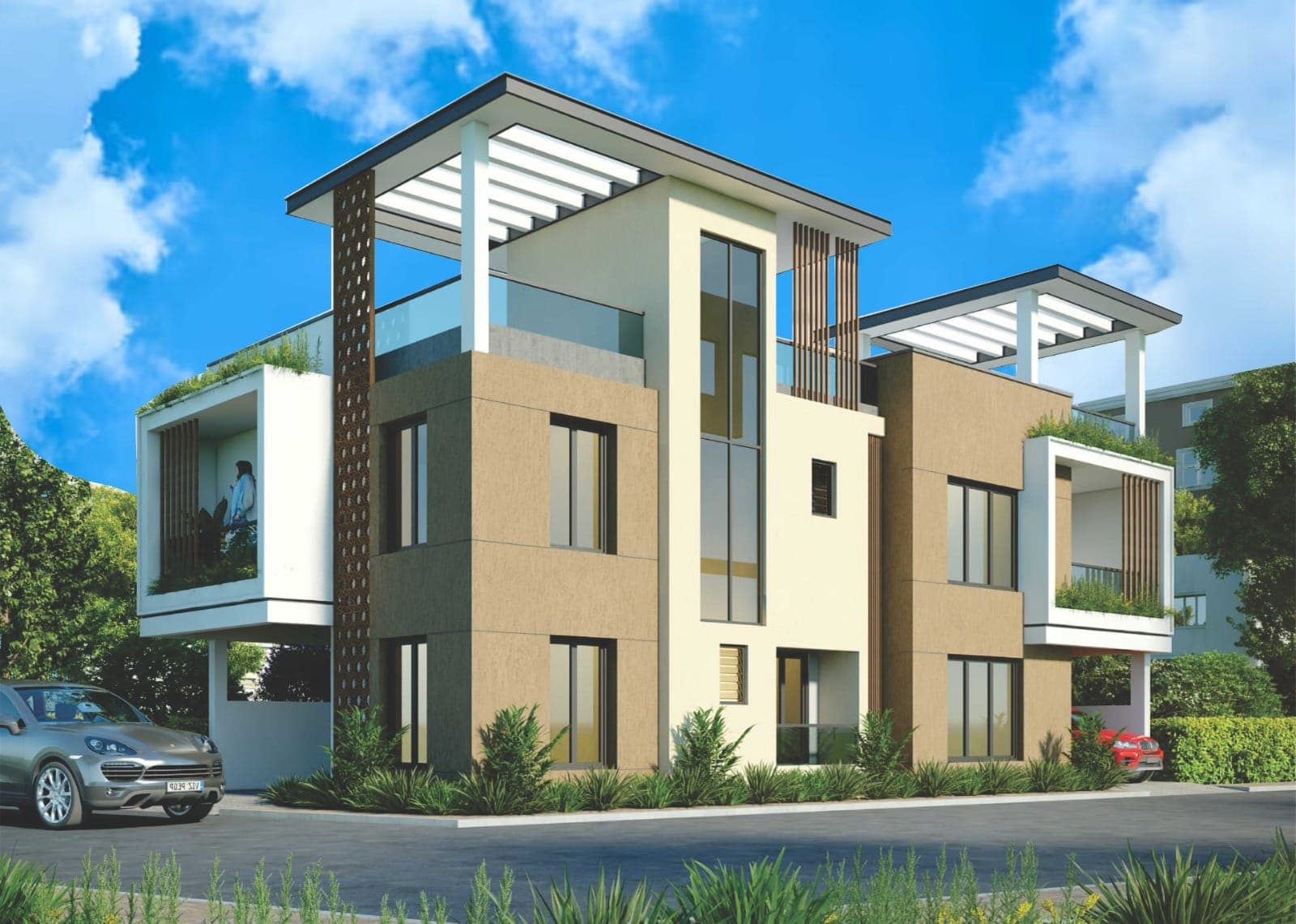
Walk into any sample flat in Velachery or East Tambaram and you will be handed a glossy brochure listing twenty-something amenities. Infinity-edge pool. Sky lounge. Jogging track. Mini theatre. The pitch makes it sound like you are buying into a resort. What nobody at the sales desk spells out is that you pay for every one of those line items twice. Once in the per sq ft price, and again every single month in maintenance, whether you ever use them or not.
After years of walking buyers through projects across south Chennai, we have a fairly settled view on this. A handful of amenities genuinely change how a flat lives day to day and hold up at resale. A larger number exist to win the showroom comparison and quietly drain your maintenance budget for the next fifteen years. The gap matters more here than in most cities, because of three things that define Chennai living: brutal summer heat, a monsoon that floods, and a water supply you cannot take for granted.
So this is the opinionated version. What to pay for, what to ignore, and how the trade-offs shift depending on whether you are moving in or renting out.
The amenities that earn their keep
These are the ones we tell buyers to actively check for, and to walk away from a project that gets them wrong. Most of them barely show up in the brochure photos, which tells you something about how amenities get marketed in the first place.
Covered car parking
In Chennai's sun, an open slot bakes your car every afternoon, and the resale gap between covered and open parking is real. A dedicated covered slot is close to non-negotiable for a family buyer with a car, and increasingly worth it for two-wheeler owners too once you factor in the monsoon. Confirm the slot is part of the registered sale and documented, not a verbal promise from the builder. Stack parking and mechanical puzzle systems are common on tighter Nanganallur and Velachery plots. They work, but check the clearance for your car size and read how the maintenance contract handles breakdowns.
Reliable power backup
Chennai's grid is far better than it was a decade ago, but summer load-shedding and monsoon outages still happen. The question is not whether there is a generator, but what it actually powers. Backup for common areas and the lift alone is the bare minimum. What you want covers at least your fans, lights and a few plug points inside the flat, ideally enough to keep a fridge and one AC running. Ask for the DG capacity allotted per flat and whether it is metered. A society that only backs up the corridor lights feels very different at 2 pm in May than one that keeps your bedroom AC alive.
Lifts, and a sensible number of them
Any building above the third floor needs a lift, obviously. The thing buyers miss is the ratio. One lift serving a single tower of thirty-plus flats means a slow morning crawl and a genuine problem on the day it goes for servicing. For anything mid-rise or taller, two lifts per core is the sensible target, with at least one sized to take a stretcher or a mattress. This is exactly the kind of detail that stays invisible until you have lived there a month.
A sound water strategy
This is the single most important amenity in Chennai and the one least likely to be sold as one. Metro Water (CMWSSB) coverage is patchy across the southern belt. Large stretches of Medavakkam, Sembakkam and the Tambaram side still lean heavily on borewells and tankers. A well-run project blends sources: a borewell, a Metro Water connection or sump where the line exists, adequate underground and overhead storage, and a sewage treatment plant whose treated water is reused for flushing and gardening so you are not pumping freshwater down the drain.
Rainwater harvesting that actually functions
Rainwater harvesting is mandatory under Tamil Nadu rules, so every project ticks the box on paper. Whether the recharge pits and rooftop collection are real and maintained is another matter entirely. In a city that swings from water scarcity to flooding within the same year, working recharge structures help the borewell yield through summer and ease waterlogging during the northeast monsoon. Ask to see the pits. A society that recharges its groundwater properly is quietly protecting your water bill for years.
Security and CCTV
Manned entry, a working boom barrier, CCTV at the gate, lobbies and parking, and a visitor log or app are the baseline most buyers and tenants now expect. This genuinely affects both peace of mind and rentability. A working mother or an IT professional renting in Velachery will pay extra for a society that feels secure. You do not need facial recognition and biometrics everywhere. You need cameras that are switched on, footage that is actually retained, and a guard who is awake.
EV-charging provision
This has moved from nice-to-have to forward-looking essential. You do not need every slot wired today, but the building should have the electrical headroom: adequate sanctioned load, conduit or a clear path to add a charging point at your slot, and a society policy that permits it. Retrofitting EV charging into a building that was never planned for it is a headache of cabling and load upgrades. As of 2026, a project with no EV thinking at all is dating itself, and that shows up when the next buyer looks at it.
The amenities that are usually oversold
None of these are useless in the abstract. The problem is the mismatch between what they cost to build and run and how much a typical small-to-mid project actually uses them. In a 200-flat gated community they can pull their weight. In a 24-flat standalone block, several are pure overhead dressed up as luxury.
The swimming pool
A pool is the classic amenity that looks like value and behaves like a liability. It needs constant filtration, chemical treatment, cleaning staff and regular top-ups, in a city where water is the scarce resource. In smaller projects the per-flat share of running it is disproportionate, and usage falls off sharply after the first year. Plenty of society pools across south Chennai sit half-drained and green by their third summer because the association could not justify the cost. If you genuinely swim, wonderful. If it is on the brochure to justify a higher rate and you will use it twice a year, you are subsidising someone else's weekend photos.
The underused clubhouse and gym
A clubhouse earns its cost only when there are enough families to keep it busy: a function hall that gets booked, an indoor games room kids actually use, a gym with maintained equipment. Below a certain project size, the clubhouse becomes a room you pay to dust. The gym question is sharper than people admit. A basic gym is cheap to provide and reasonably used, but a high-spec gym with imported equipment in a small society means expensive annual maintenance contracts split across too few flats. Match the ambition of the amenity to the number of doors paying for it.
Gimmick features
Mini theatres, sky lounges, infinity decks, themed landscaping, a 'business centre' that turns out to be one desk and a printer. These exist to win the showroom comparison against the project down the road. They photograph beautifully and almost nobody uses them after move-in. Treat them as marketing, not value, and do not let them justify a meaningfully higher per sq ft.
How amenities move per sq ft and monthly maintenance
Amenities hit your wallet in two places, and buyers usually only look at the first.
- Per sq ft, paid once. A heavily amenitised gated community will quote a higher rate than a plain standalone block on the same road, sometimes a noticeable gap. Part of that premium is genuine build quality and land. Part of it is the pool and clubhouse you are folding into your loan and paying interest on for years.
- Monthly maintenance, paid forever. This is the number to interrogate. Maintenance is typically charged per sq ft per month, and amenity-heavy societies sit at the upper end of the local range while bare ones sit lower. On a 1,000 sq ft flat that difference compounds into a meaningful annual sum, every year, creeping upward as costs rise.
- The sinking fund and major repairs. Pools, lifts, generators and STPs all need periodic capital spend. A well-run association builds a corpus for it. Ask whether one exists and how healthy it is, because if it does not, a big repair lands as a sudden special levy on you.
Ask the builder or the existing association for the current monthly maintenance per sq ft and what it covers, then ask what it was two years ago. A figure that has jumped sharply tells you the amenities cost more to run than the brochure implied. For a closer look at how recurring costs eat into returns, our rental yields breakdown is worth a read.
Gated community vs standalone building
This is the real decision sitting underneath the amenities question, and the honest answer is that it depends on what you value.
A gated community gives you shared infrastructure no single small building can match: serious water storage and an STP, proper backup, round-the-clock manned security, and the social density that makes a clubhouse and play area genuinely useful for a family with children. The cost is a higher entry price, higher monthly maintenance, and association politics. The upside at resale is real, because the next buyer values the same things, and a managed community tends to age more gracefully than a neglected standalone.
A standalone building, the eight to twenty-flat blocks common in Nanganallur, parts of Velachery and the older lanes of Adambakkam, gives you lower maintenance, more usable carpet area for your money since you are not subsidising a pool, and simpler decision-making. The trade-off is that you are far more exposed on water, power and security. With fewer flats sharing the cost, one expensive problem hurts more, and the building rises or falls on the diligence of a handful of owners. Our resale vs new construction guide digs into the condition questions that matter most for older standalone stock.
There is no universally right answer. A young family that wants a play area and security will lean gated. A buyer chasing maximum space for the budget in a well-connected pocket, comfortable managing the essentials, can do very well in a solid standalone. What you must not do is pay gated-community amenity prices for a standalone block that carries the brochure features but not the density to support them.
Priorities differ: living in vs renting out
The same flat carries different amenity priorities depending on why you are buying it.
If you are moving in
Optimise for daily livability over a fifteen-year horizon. Water reliability, in-flat power backup, covered parking, lift adequacy and security are the things you feel every single day. Lower, predictable maintenance protects your monthly budget. A pool or clubhouse is worth it only if your household genuinely uses it, so be honest about that rather than buying the version of your life the brochure is selling. The 2 BHK vs 3 BHK decision framework and the floor selection guide cover the other lived-in factors that interact with amenities.
If you are renting out
Optimise for what tenants in that micro-market actually pay for, and for low management hassle. In the IT-driven rental belts of Velachery and Medavakkam, tenants reliably value security, covered parking, a working lift, a power-backed flat and dependable water. They rarely pay a meaningful premium for a fancy clubhouse, and an underused pool only raises the maintenance you either absorb or pass on, which can make your unit less competitive on total monthly outgo. As an investor, every rupee of avoidable maintenance is a drag on net yield. Lean toward the amenities that improve rentability and away from the ones that only improve the brochure.
The short version
Pay for the boring stuff. Covered parking, real power backup, enough lifts, a serious water strategy combining borewell, corporation water and reused STP water, working rainwater harvesting, proper security and CCTV, and EV-charging provision are the amenities that make a Chennai flat genuinely better to live in and easier to sell or rent. They hold up against the heat, the monsoon and the water shortage that define this city.
Be sceptical of the rest. Pools, oversized clubhouses and gimmick features are usually there to win the sales-floor comparison and justify a higher rate, and you carry their cost every month for years whether you use them or not. Match the ambition of the amenities to the size of the project, decide gated versus standalone on what you actually value, and weigh every feature against one simple test: would a tenant or the next buyer pay extra for it?
For locality-level context, see our field guides for Velachery, Medavakkam and Nanganallur 3 BHK, and the locality comparison if you are still choosing an area. When you are ready to weigh a specific project's amenities against its price and maintenance, reach out to our team and we will walk through it with you.
Tags

The Property Search Team
Real Estate Experts
An experienced real estate professional with deep insights into Chennai's property market trends and investment opportunities.